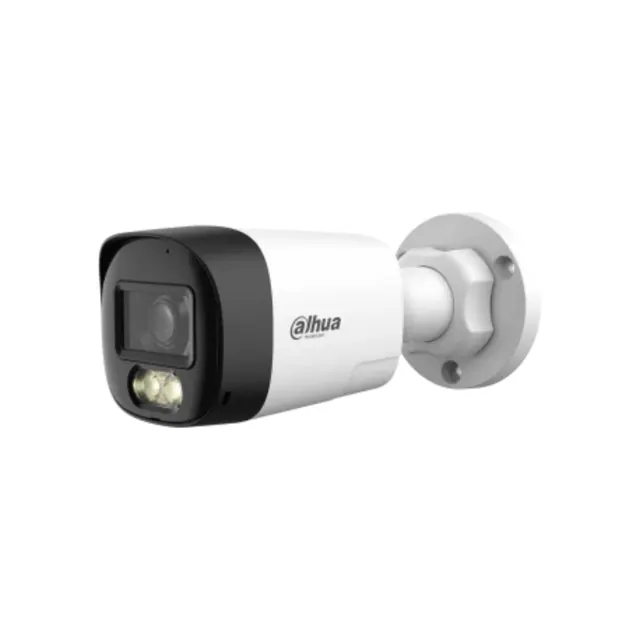

Bullet vs Dome vs Turret Cameras: Which Shape Fits Where?
Quick answer
Camera shape is not just looks. It affects deterrence, night vision, tamper resistance and how easy the camera is to aim. Here is where each style works best.
By ITvein TeamPublished Updated 2 min read
Walk into any CCTV shop and you will see three main shapes: bullet, dome and turret (also called eyeball). The electronics inside can be identical, so why choose one over another? Because the housing changes where the camera works best.
Bullet cameras
A bullet camera is a cylinder on a bracket, pointing in one clear direction.
Strengths
- Highly visible, which deters casual intruders.
- Easy to aim at long, narrow areas such as a gate, boundary wall or driveway.
- Room for larger IR LEDs and longer lenses, so they often have longer night-vision range.
- The hood helps shade the lens from sun and rain.
Watch out for
- Easy to see and therefore easier to knock or twist if mounted low.
- Birds and spiders like the hood; schedule cleaning. See fix blurry night images.
Best for: gates, perimeter walls, car parks, building corners. Browse bullet cameras.
Dome cameras
A dome camera sits under a clear or smoked cover attached flat to a ceiling or wall.
Strengths
- Discreet; people cannot easily tell which way it is looking.
- Vandal-resistant models (IK10) withstand knocks, making them ideal where cameras can be reached.
- Suits indoor ceilings in shops, offices and corridors.
Watch out for
- The dome cover can reflect infrared light back into the lens if it is dirty or scratched, causing hazy night images.
- Slightly harder to aim precisely during installation.
Best for: shops, counters, offices, reception areas, lift lobbies.
Turret (eyeball) cameras
A turret looks like a ball sitting in a socket, without a dome cover.
Strengths
- No cover in front of the lens, so no IR reflection problems — usually the clearest night images of the three.
- Compact and neat, easy to angle on walls or ceilings.
- Good balance between discretion and visibility.
Watch out for
- Less tamper-resistant than an IK10 dome.
Best for: porches, main doors, garages, homes and offices where a tidy look matters. Browse dome and turret cameras.
Side-by-side
| Bullet | Dome | Turret | |
|---|---|---|---|
| Deterrence | High | Medium | Medium |
| Vandal resistance | Low–medium | High (IK10 models) | Medium |
| Night image clarity | Good | Depends on clean cover | Very good |
| Aiming ease | Very easy | Moderate | Easy |
| Typical use | Outdoor perimeter | Indoor/reachable spots | Porches, homes, offices |
Mixing shapes in one system
Most good installations mix styles: bullets on the boundary and gate, turrets at doors and porches, domes inside. As long as the cameras use the same technology (all IP or all HD analog) they record to the same recorder. If you are deciding between technologies, read IP vs HD analog CCTV.
Mounting height and angle
Mount cameras around 2.5–3 metres high: high enough to be out of easy reach, low enough to capture faces rather than the tops of heads. Avoid pointing cameras directly at the sky or at strong lights. Our home camera placement guide covers this in detail.
Frequently asked questions
Which camera shape gives the best night vision?
Turret cameras usually give the clearest night images because there is no dome cover to reflect infrared. Bullets with large IR arrays often reach the furthest.
Are dome cameras weatherproof?
Outdoor-rated domes are. Check for an IP66 or IP67 rating on the specification sheet before installing any camera outside.
Should cameras be hidden or visible?
For deterrence, visible cameras work best on the outside of a property. Inside shops and offices, discreet domes reduce tampering. Always respect privacy and avoid pointing cameras into neighbours' private spaces.
Want advice for your own site?
Send photos and your requirements — we reply with an itemised quotation.